


Categories
Homebuyer Tips, Homebuying TipsPublished August 18, 2026
Down Payments Are Smaller Than They’ve Been in Years. Could That Help You Buy a Home?


Saving enough money for a down payment can feel like one of the biggest challenges of buying a home. With affordability still a concern for many buyers, it’s understandable to wonder how much cash you really need to get started.
But there’s some encouraging news: today’s buyers are putting less money down than they have in several years.
According to Realtor.com, the typical down payment was about $23,400 in early 2026. That was roughly $5,000 less than the previous year, representing a 19% year-over-year decline.
Here’s a look at how down payments have changed: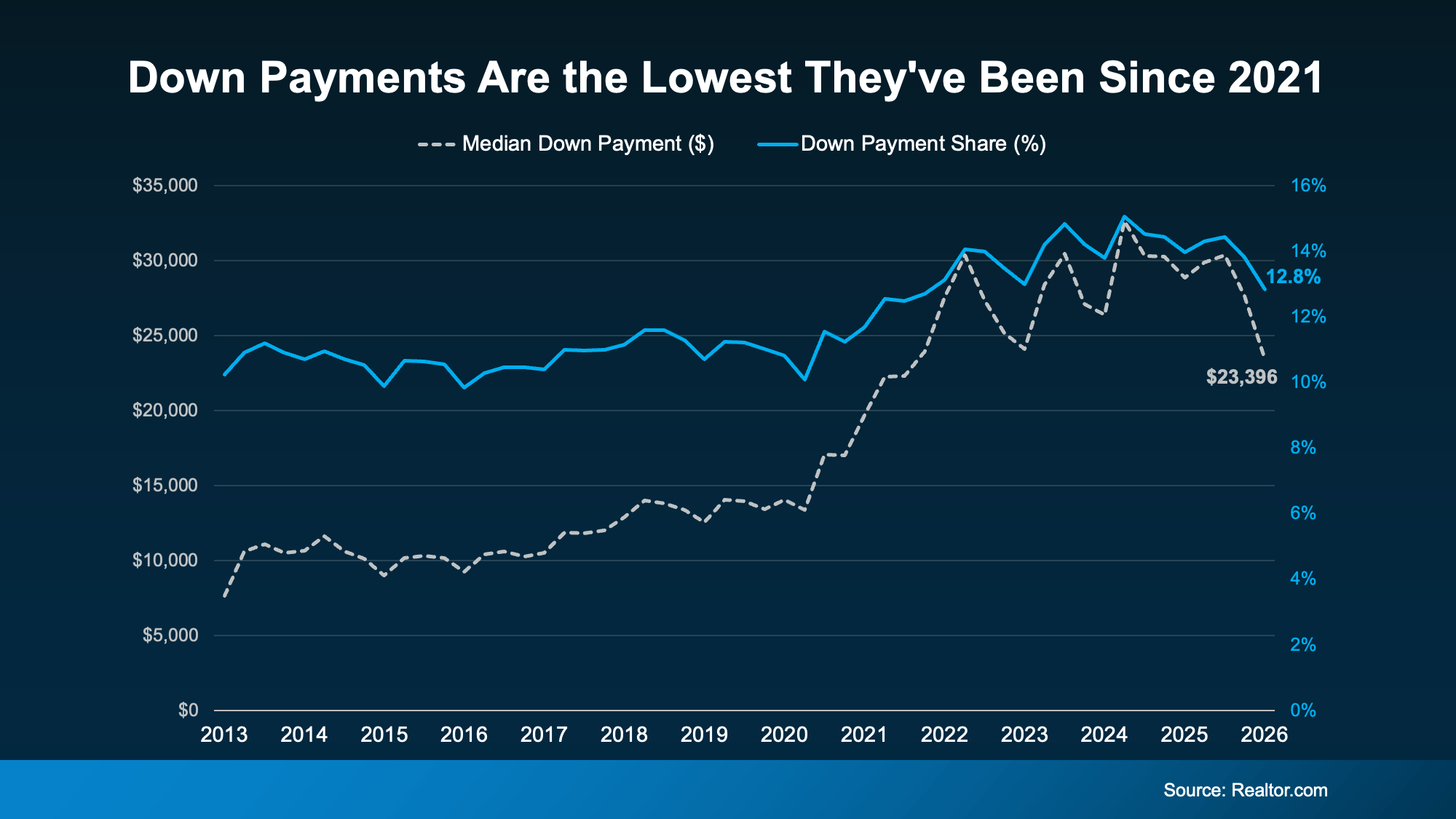
The trend raises an important question: Why are buyers putting less money down, and could you potentially do the same?
Why Are Down Payments Getting Smaller?
Several factors are contributing to the trend.
1. There’s Less Competition Among Buyers
The housing market is becoming more balanced in many areas.
During the intense competition of the past few years, buyers sometimes felt pressure to make their offers as strong as possible. A larger down payment could help make an offer look more attractive.
With less competition in some markets, buyers may have more flexibility when deciding how much cash to put toward their purchase.
2. Home Prices Are Growing More Slowly
Your down payment is based on the purchase price of the home.
When home prices rise more slowly—or level off—the amount needed for a down payment may also be more manageable.
Of course, prices vary significantly by market and property type, so it’s important to look at the numbers for the specific area where you want to buy.
3. More Buyers Are Choosing Lower-Down-Payment Loans
You may not need to put 20% down to buy a home.
Depending on your circumstances, there are mortgage programs that allow buyers to purchase with a much smaller down payment. Government-backed options, including FHA and VA loans, can offer lower-down-payment opportunities for qualified buyers.
That means the amount you need to save may be different from what you originally expected.
Could You Qualify for Down Payment Assistance?
A down payment doesn’t always have to come entirely from your personal savings.
Down payment assistance programs can provide another option for eligible buyers.
Research from the Urban Institute and Down Payment Resource found that nearly 44% of recent buyers in the 10 largest U.S. metropolitan areas qualified for a down payment assistance program, yet many completed their purchases without using the assistance available to them.
Here’s a quick look at how many buyers may qualify: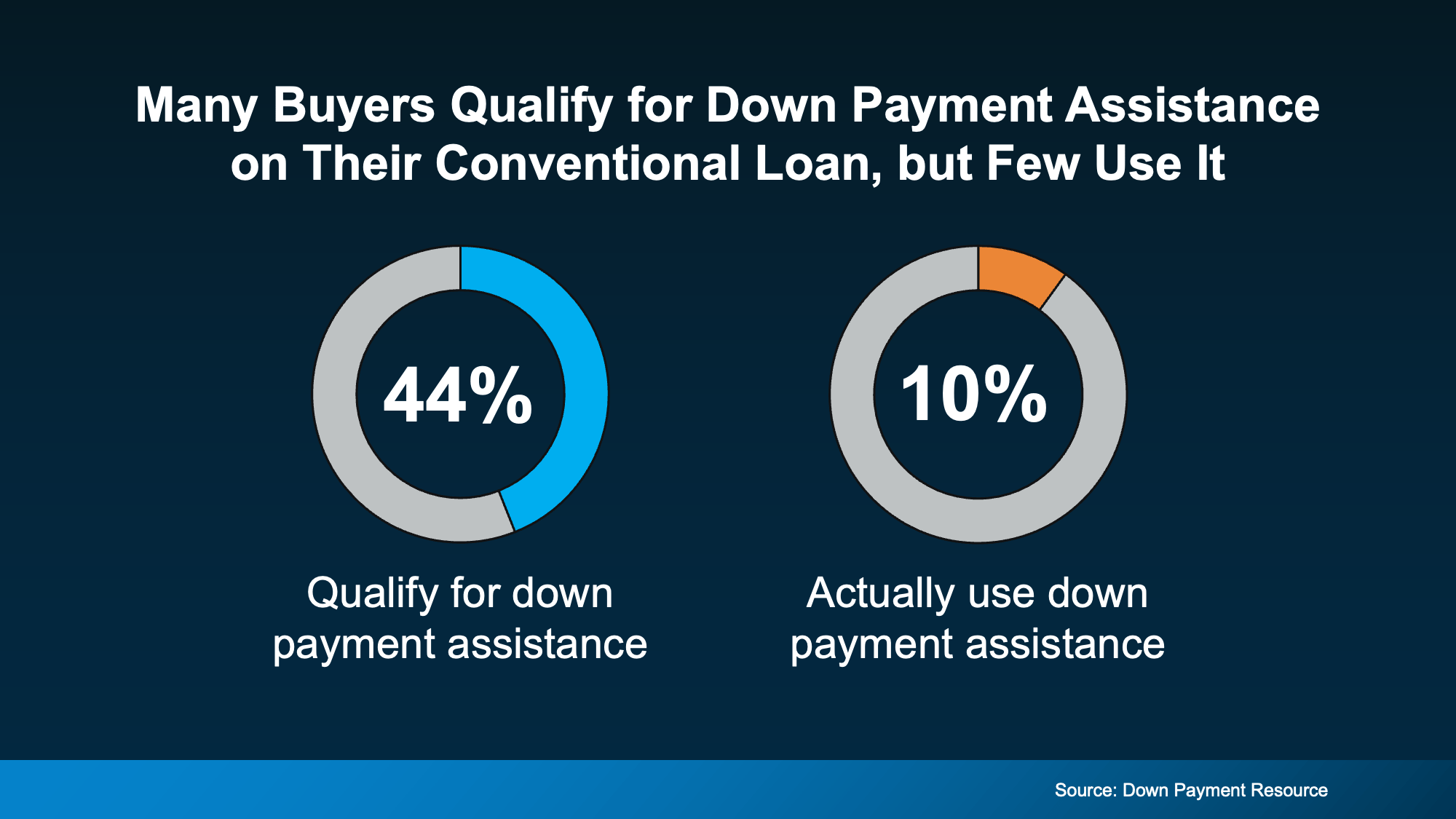
There are also more programs available than many buyers realize.
According to Down Payment Resource, there are more than 2,600 down payment assistance programs nationwide. While many are designed specifically for first-time buyers, others are available to repeat buyers as well.
Some programs may also be available to buyers with higher incomes than you might expect.
The key is finding out what you actually qualify for rather than assuming you don't qualify.
Can Family Help With Your Down Payment?
For some buyers, financial help from family members can also make homeownership more achievable.
Research from Veterans United found that many parents have provided—or plan to provide—financial support to help their children purchase a home.
That assistance may go toward the down payment, closing costs, or other expenses associated with getting a mortgage.
If family members are willing and able to help, a gift or other approved financial assistance could potentially help you reach your homeownership goal sooner.
Your lender can explain what types of assistance are allowed and what documentation may be required.
Does Buying a Home Require 20% Down?
No. A 20% down payment is not always required to buy a home.
The amount you need depends on the type of mortgage, your financial situation, the property, and the requirements of your lender.
Putting 20% down can have certain advantages, such as potentially avoiding private mortgage insurance on some conventional loans. But waiting until you have 20% saved isn't necessarily the right choice for every buyer.
A conversation with a qualified lender can help you understand your options and determine what makes sense for your situation.
How Can You Find Out How Much You Need?
Instead of focusing only on a specific down payment percentage, start by looking at the complete cost of buying a home.
Consider:
- Your available savings
- Your desired home price
- Your mortgage options
- Closing costs
- Down payment assistance
- Potential family assistance
- Monthly mortgage payment
- Property taxes and insurance
- Other ongoing homeownership costs
Understanding the full picture can help you create a more realistic buying plan.
Bottom Line
Down payments are becoming smaller for many buyers, which could create more opportunities for people who thought they needed years to save.
Between lower-down-payment mortgage options, assistance programs, and potential help from family, you may have more paths to homeownership than you realize.
Before assuming you need to wait, talk with a trusted lender about your options and find out what you may qualify for.
or another way