


Categories
Home Selling TipsPublished August 11, 2026
Selling and Buying a Home at the Same Time? Here’s Where to Start


If you’re thinking about moving, you may be asking yourself a big question:
Should you buy your next home first, or sell your current home first?
There’s no one-size-fits-all answer. The right choice depends on your finances, your local housing market, your timeline, and how comfortable you are with the risks involved.
But for many homeowners, selling first can make the transition easier and more financially manageable.
Here’s why.
Should You Sell Your Home Before Buying Another One?
Selling first gives you a clearer picture of your finances before you make an offer on your next home.
You’ll know how much your current home sold for, how much equity you have, and how much money you’ll have available for your next purchase.
That can make the entire process easier to plan.
1. You Can Avoid Paying Two Mortgages
One of the biggest risks of buying before selling is ending up with two homes—and two mortgage payments.
If your current home takes longer to sell than expected, you could be responsible for both mortgages for weeks or even months.
There could also be unexpected expenses along the way, such as repairs, insurance, utilities, or other costs associated with maintaining two properties.
Selling first eliminates much of that financial uncertainty.
Instead of wondering how long you'll be carrying two mortgages, you can focus on finding your next home with a better understanding of what you can afford.
2. Your Home Equity Can Help Fund Your Next Move
Another major advantage of selling first is knowing exactly how much equity you have available.
Home equity is the difference between your home's current market value and what you still owe on your mortgage.
For example, if your home sells for $800,000 and you owe $450,000 on your mortgage, you may have approximately $350,000 in gross equity before selling costs and other expenses.
That money could potentially help fund your next purchase.
Depending on your situation, your proceeds could be used toward:
- Your next home's down payment
- Closing costs
- Moving expenses
- Necessary improvements
- Paying down your next mortgage
Knowing your available funds before shopping can help you set a more realistic budget.
3. Your Offer May Be More Attractive to Sellers
When you make an offer on a new home while still trying to sell your current one, you may need a home-sale contingency.
That means your purchase depends on your existing home selling.
For a seller, that can introduce uncertainty.
But if your home has already sold, you can potentially make an offer without that contingency.
That may make your offer more attractive, especially when a seller is comparing multiple buyers.
A stronger offer doesn't always mean offering the highest price. Sellers may also value a buyer who is financially prepared and more likely to close on time.
Your real estate agent can help you structure your offer based on the current market and your goals.
Is There a Catch?
Selling first has its tradeoffs, too. Before you decide which approach is right for you, it helps to look at the pros and cons side by side.
Here’s a quick breakdown based on information from Zillow: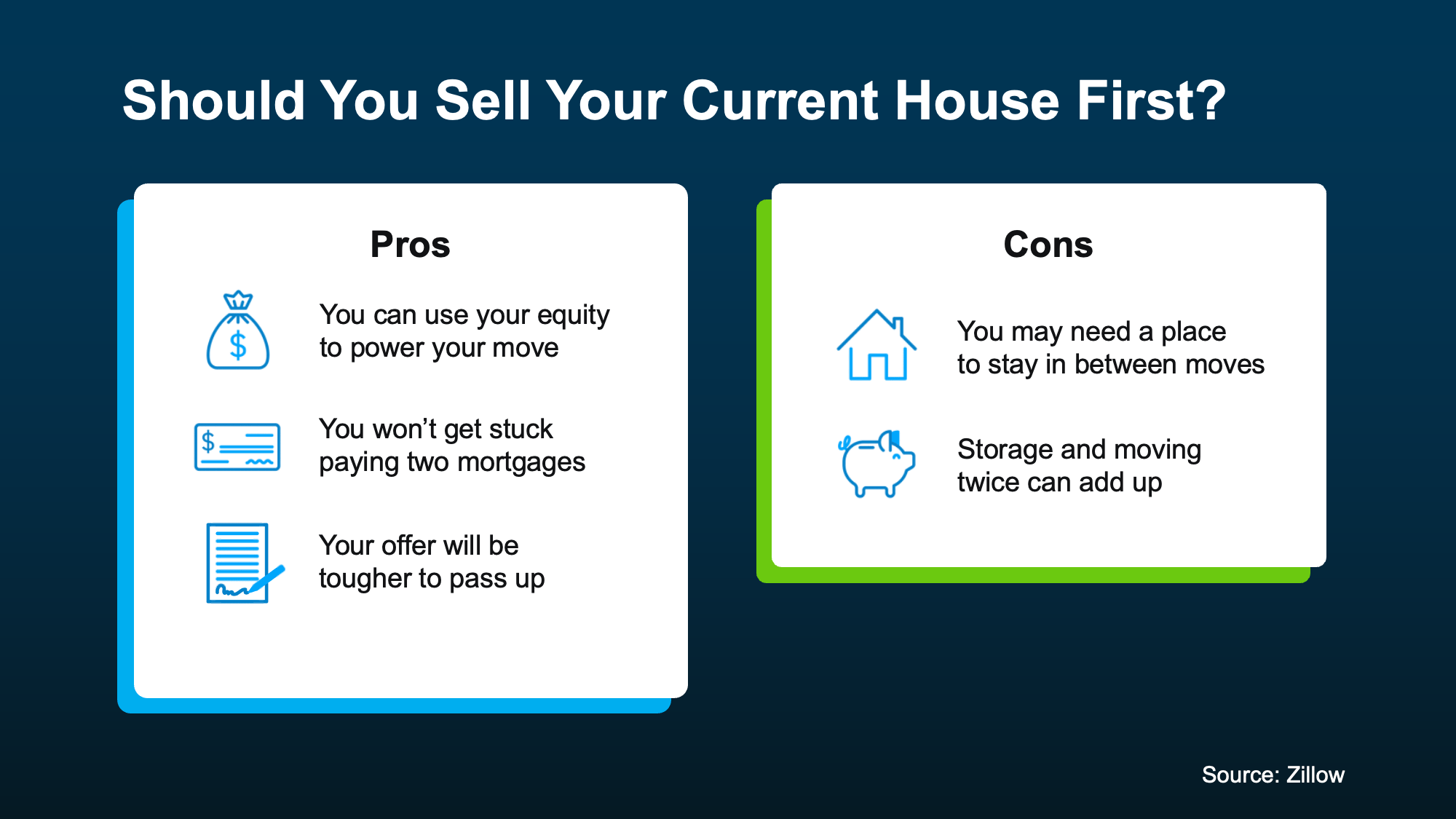
The good news is that many of the challenges of selling first can be managed with the right plan.
Your agent can help you explore options such as a rent-back agreement, which may allow you to stay in your home for a set period after closing. You may also be able to negotiate flexible closing dates to give yourself more time to transition into your next home.
What If You Buy Before You Sell?
There are situations where buying first may make sense.
You may have enough savings to comfortably manage two mortgages for a period of time. You may also have strong confidence that your current home will sell quickly.
Some homeowners simply don't want to sell until they know where they're going next.
The key is understanding the financial risk before making that decision.
Before buying first, consider:
Can I comfortably afford two mortgage payments?
What happens if my current home takes longer to sell?
Do I have enough cash reserves for unexpected expenses?
How much equity do I have in my current home?
What happens if my home's final sale price is lower than expected?
Having a plan for these possibilities can help you avoid unnecessary stress.
How Do You Coordinate Selling and Buying a Home?
The best strategy is often to treat the two transactions as one larger move.
Start by understanding your current home's value and estimated selling costs. Then determine how much equity you may have available and what you can comfortably spend on your next home.
From there, your agent can help you create a timeline that coordinates:
- Preparing your current home for sale
- Listing and marketing the property
- Reviewing offers and negotiating the sale
- Planning your closing and move-out dates
- Searching for your next home
- Making an offer and negotiating the purchase
- Coordinating both closing dates
The goal isn't simply to sell one house and buy another.
The goal is to make the transition from one home to the next as smooth as possible.
The Bottom Line
Selling and buying at the same time can feel complicated, but you don't have to figure it out on your own.
For many homeowners, selling first can provide more financial clarity, reduce the risk of carrying two mortgages, and give you a stronger position when making an offer on your next home.
But every situation is different.
Before deciding whether to sell first or buy first, take a close look at your finances, your timeline, and the local housing market.
If you're thinking about making a move, let's talk about your options. I can help you understand what your current home may be worth, estimate your potential equity, and create a plan for your next chapter.
or another way