


Categories
Home Selling TipsPublished September 1, 2026
Your House Didn’t Sell? Here’s How to Turn It Around


Your House Didn’t Sell? Here’s How to Turn It Around
Putting your home on the market and not getting an offer can be frustrating. You may start wondering whether the timing was wrong, the price was too high, or something else kept buyers from making an offer.
The good news is that an unsuccessful listing doesn’t mean your home can’t sell. It may simply mean the strategy needs to change.
Before you relist, take a fresh look at what happened and identify what you can do differently this time.
What Should You Do If Your House Didn’t Sell?
Start by looking at the listing from a buyer’s point of view.
Ask yourself:
- Was the asking price competitive?
- Did the photos make the home look appealing?
- Was the home marketed beyond the MLS?
- What did buyers say during showings?
- Were there offers that fell apart?
- Was there anything that made buyers hesitate?
These answers can help you build a stronger plan for the next listing.
1. Revisit the Asking Price
One of the biggest reasons a home doesn’t sell is that the price doesn’t match what buyers are willing to pay.
Even a beautiful home can sit on the market if buyers believe they can find better value elsewhere.
Before relisting, review recent comparable sales, current competition, and buyer activity in your area. Your goal isn’t simply to choose a lower price. It’s to find a price that makes your home compelling compared with other properties buyers are considering.
A fresh pricing strategy can make a major difference in how much attention your listing receives.
2. Improve the First Impression
Buyers often form an opinion about a home before they ever walk through the door.
Your listing photos, curb appeal, lighting, paint, fixtures, landscaping, and overall presentation can all influence whether someone wants to schedule a showing.
Walk through your home as if you were seeing it for the first time. Look for small improvements that could make a big difference.
Consider:
- Touching up paint
- Improving lighting
- Decluttering rooms
- Removing overly personal items
- Refreshing the landscaping
- Making the entryway more welcoming
- Updating listing photos after improvements are completed
You don’t necessarily need a major renovation. Sometimes a cleaner, brighter, and more polished presentation is enough to help buyers see the home differently.
3. Build a Stronger Marketing Plan
Listing a home on the MLS is only the beginning.
With plenty of homes competing for buyers’ attention, a basic listing can easily get lost. Your next marketing plan should give buyers more reasons to notice, explore, and remember your property.
Depending on the home and market, that could include:
- Professional photography
- Video tours
- Social media marketing
- Online advertising
- A stronger property description
- Open houses
- Targeted buyer outreach
- Consistent follow-up with interested buyers
The goal is to create more opportunities for the right buyer to discover your home.
4. Pay Attention to Buyer Feedback
If your home had plenty of showings but no offers, that feedback can be especially valuable.
It means buyers were interested enough to come see the property, but something may have stopped them from taking the next step.
Look for patterns in the feedback.
Are buyers consistently mentioning the price? The condition? A particular room? The layout?
Instead of treating feedback as criticism, use it as information. Even small adjustments based on repeated comments can help improve your next listing.
5. Be Ready to Negotiate
Getting an offer is exciting, but the negotiation process can determine whether the transaction actually reaches closing.
Today’s buyers may request repairs, closing-cost credits, or other concessions depending on the property and market.
That doesn’t mean you have to agree to everything. It means it helps to know which terms matter most to you before negotiations begin.
Work with your agent to determine where you can be flexible and where you want to hold firm. Sometimes a reasonable concession can help keep a good deal together rather than cause it to fall apart.
Should You Relist With a Different Real Estate Agent?
This is an important question if your home previously expired or was withdrawn from the market.
A different agent can bring a fresh perspective to your pricing, marketing, presentation, and overall selling strategy.
Research from REDX suggests that homeowners who relist with a different agent may have better selling outcomes than those who use the same agent again.
Here’s a quick look at the data: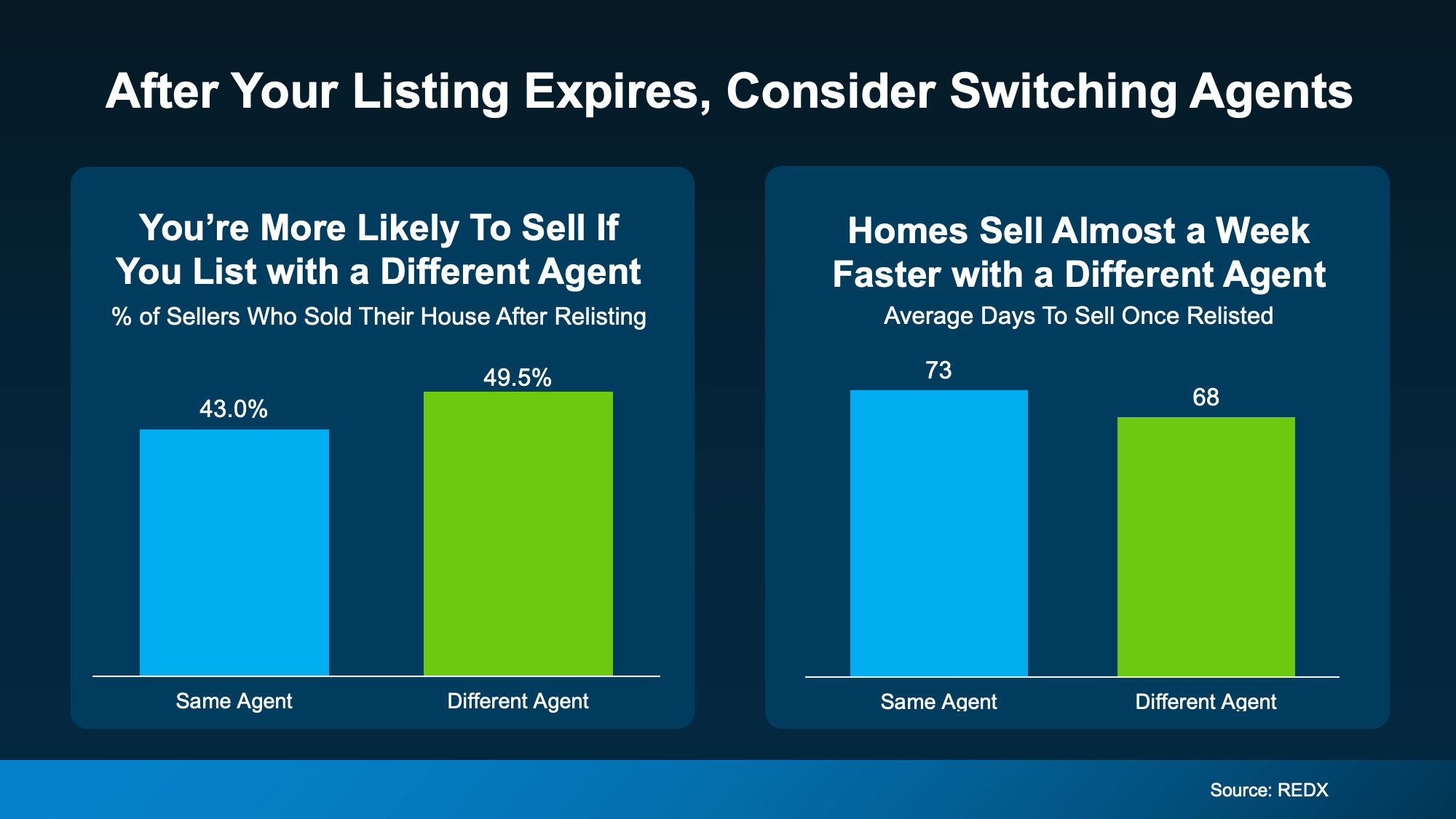
Of course, changing agents isn’t automatically the answer. The most important thing is finding a professional who can clearly explain what went wrong, what will change, and how they plan to approach the listing differently.
What If Your Home Had Offers That Didn’t Close?
If you received offers but the sale fell through, the problem may not have been the listing itself.
Take a closer look at what happened during the transaction.
Was there an inspection issue? Financing problem? Appraisal concern? Buyer hesitation? Negotiation issue?
Understanding why the previous deal failed can help you prepare for the next one and potentially avoid the same problem.
How Can You Give Your Home a Better Chance of Selling?
The best strategy depends on your specific property and local market.
A home that didn’t sell six months ago may have a different opportunity today. At the same time, simply putting the same listing back on the market without making changes may produce the same result.
Before relisting, take the time to review the price, presentation, marketing, feedback, and negotiation strategy.
Bottom Line
If your house didn’t sell the first time, you’re not stuck.
A failed listing can give you valuable information about what buyers responded to—and what may have held them back.
The next step isn’t necessarily to give up or simply try again. It’s to take a fresh look, make the right adjustments, and create a stronger plan for the next listing.
If you’re thinking about relisting your home, I’d be happy to help you take a fresh look at what happened and identify opportunities to improve your next sale.
or another way